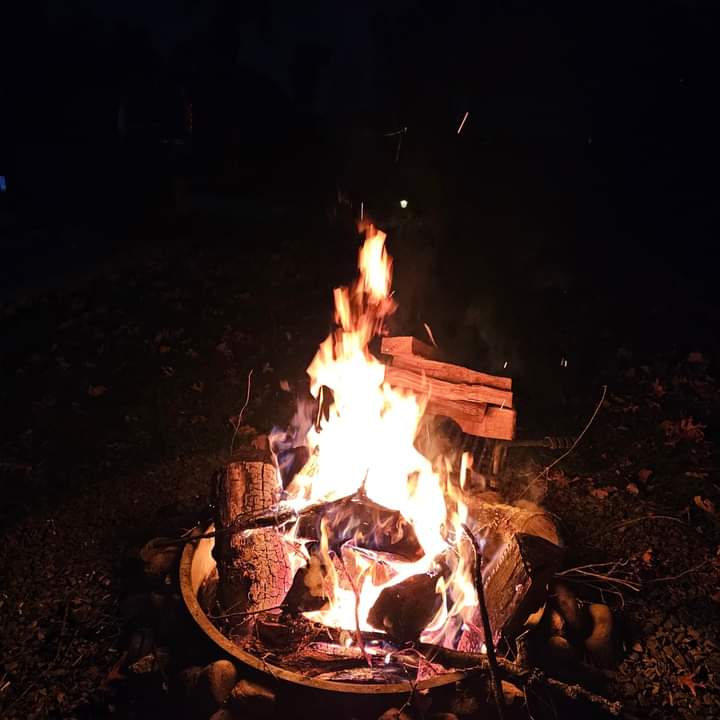
Quick answer: To start a campfire safely, use a designated fire pit or ring, gather tinder, kindling, and dry, seasoned firewood, stack it using the teepee, log cabin, or lean-to method, light it from the base, and extinguish it fully with water until the pit is cool to the touch. Never leave a fire unattended, and always buy firewood locally rather than transporting it from home.
Camping at Nature’s Touch Campground is a great way to connect with nature, and knowing how to build a fire properly ensures a safe and enjoyable experience. Every site at Nature’s Touch includes its own fire ring, so you’re never far from a spot to cook, warm up, or just sit and watch the flames. Follow these steps to build a campfire for cooking, warmth, or ambiance.
What You’ll Need
- Tinder: dry leaves, grass, small twigs, newspaper, or fire starters
- Kindling: small sticks about the width of a pencil
- Firewood: dry, seasoned logs or split wood, purchased locally
- Waterproof matches, a lighter, or a fire starter
- A bucket of water or a hose nearby
- A shovel or long stick for stirring and extinguishing
1. Choose a Safe Location
- Always use the designated fire pit provided at your site at Nature’s Touch Campground. If you’re building a fire away from a fire ring for any reason, select a spot at least 10 feet away from trees, dry grass, tents, and other flammable materials.
- Check current fire regulations and any burn restrictions before lighting a fire. Wisconsin DNR issues burn restrictions during dry conditions, and the campground will post any active restrictions at the office.
- Clear the area of leaves, twigs, and other debris that could catch fire.
2. Gather Fire Materials
To build a fire that burns efficiently, collect three types of fuel:
- Tinder: dry leaves, grass, small twigs, newspaper, or fire starters. These ignite quickly and help start the fire.
- Kindling: small sticks about the width of a pencil that help the flames grow stronger.
- Firewood: larger logs or split wood that sustain the fire. Always use dry, seasoned wood for the best burn and the least smoke.
A note on firewood: Many Wisconsin campgrounds, including Nature’s Touch, recommend buying firewood locally instead of bringing it from home. Transporting firewood long distances can spread invasive pests like the emerald ash borer, which have damaged forests across the state. The camp store sells firewood by the bundle, so you can skip hauling your own and support a healthier campground in the process.
3. How to Build a Fire
There are several effective methods for stacking wood to ensure good airflow and easy ignition.
- Teepee method: Place tinder in the center and stack kindling around it in a cone shape. This allows flames to climb and ignite the larger wood easily.
- Log cabin method: Lay two larger logs parallel to each other, then stack two smaller logs perpendicular on top. Continue layering to create a square structure with an open center for tinder and kindling.
- Lean-to method: Lean kindling against a large log with tinder placed beneath it. This method works well in windy conditions.
4. How to Start a Campfire
- Use waterproof matches, a lighter, or a fire starter to ignite the tinder.
- Light the fire at multiple points to help it spread evenly.
- Gently blow at the base of the fire to provide oxygen, which helps the flames grow.
- Once the kindling is burning steadily, slowly add larger logs to maintain the fire.
5. Maintain the Fire
- Keep your fire at a manageable size. Large fires are harder to control and put out.
- Always keep a water source or a shovel nearby in case you need to extinguish the fire quickly.
- Never leave your campfire unattended, even for a few minutes.
- Keep kids and pets a safe distance back, and designate one adult to watch the fire at all times if children are nearby.
6. Extinguish the Fire Properly
- Allow the fire to burn down to ash.
- Pour water over the embers while stirring with a stick or shovel to ensure complete cooling.
- Continue adding water and stirring until the fire pit is cool to the touch.
- Never bury embers. Buried embers can continue to smolder underground and reignite later.
What to Cook Over Your Campfire
Once your fire is going, it’s ready for more than just warmth. Try roasting the classic s’more, or bring one of our make-ahead foil packet meals for an easy, low-cleanup dinner cooked right over the coals.
Book Your Site
Every site at Nature’s Touch Campground includes its own fire ring, so campfire nights are part of every stay. Explore RV sites, cabin rentals, or tent camping, and check the rates and discounts page for current pricing.
With this guide, you’ll be prepared for a safe and enjoyable campfire experience at Nature’s Touch Campground.
Frequently Asked Questions
What do I need to start a campfire while camping? You need tinder (dry leaves, twigs, or fire starters), kindling (pencil-width sticks), and dry seasoned firewood, along with a lighter or waterproof matches and a water source for putting the fire out.
Should I bring my own firewood to a Wisconsin campground? It’s best not to. Transporting firewood long distances can spread invasive pests like the emerald ash borer. Buying firewood locally, including from the campground’s camp store, helps protect the surrounding forest.
What is the best way to stack a campfire? The teepee method is easiest for beginners and lights quickly. The log cabin method burns longer and more evenly. The lean-to method works best in windy conditions.
How do you properly put out a campfire? Let the fire burn down to ash, then pour water over the embers while stirring with a stick or shovel. Keep adding water and stirring until the fire pit is completely cool to the touch. Never bury hot embers.
Does every site at Nature’s Touch Campground have a fire pit? Yes. Every site at Nature’s Touch Campground includes its own fire ring, so you can enjoy a campfire every night of your stay.